Therapy Dog vs Service Dog: What Most Dog Owners Get Wrong
May 28, 2026
Why So Many Dog Owners Confuse Therapy Dogs and Service Dogs
If you have spent time researching therapy dog training, service dog training, or emotional support animals online, you have probably realized how confusing the information can become. Many dog owners use the terms interchangeably even though they all serve very different purposes. That confusion often leaves families unsure about what type of training their dog actually needs.
The reality is that therapy dogs, service dogs, and emotional support animals are not the same thing. They have different goals, different training expectations, and different legal protections. Understanding those differences helps owners make better decisions for both themselves and their dogs.
At Newman's Dog Training, we have seen increasing interest in therapy dog training in both Kansas City and Northwest Arkansas. More schools, universities, hospitals, counseling centers, and workplaces are welcoming calm, social dogs into their environments. Many owners are now wondering whether their own dog might enjoy this type of work.
To learn more, visit our therapy dog training page for KC!
Visit our therapy dog training page for NWA!
What a Therapy Dog Actually Does
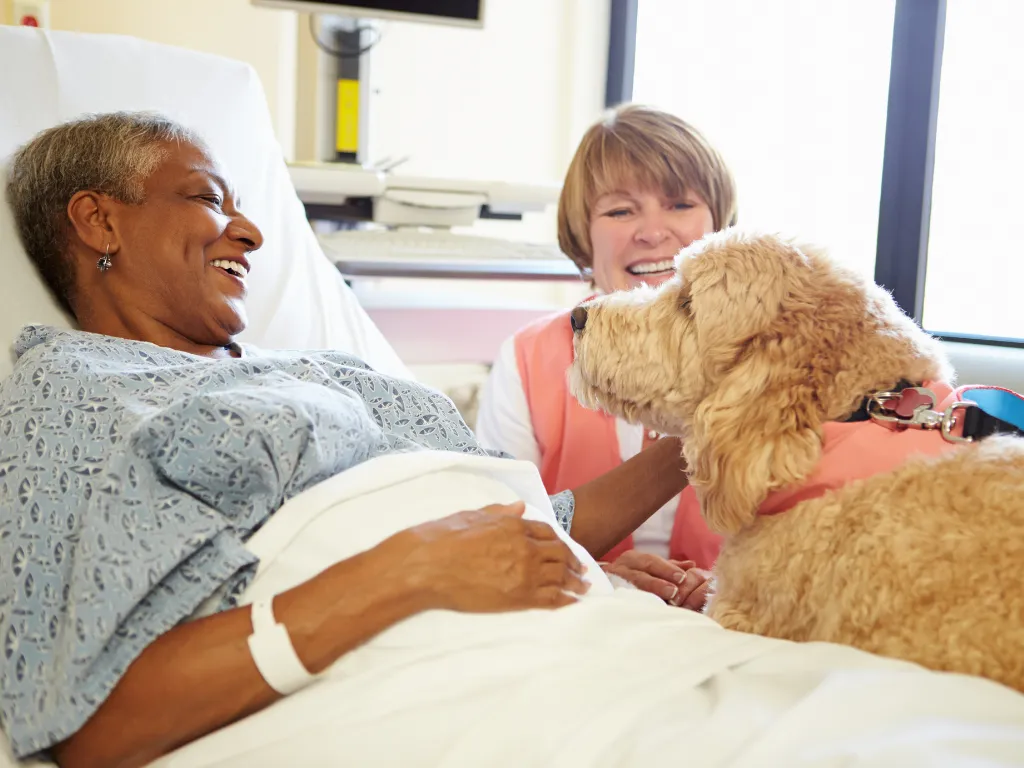
A therapy dog is trained to provide comfort and emotional support to many different people in community settings. These dogs often visit hospitals, schools, nursing homes, universities, libraries, and wellness programs where their calm behavior can help people feel more relaxed and supported.
Unlike service dogs, therapy dogs are not trained for one disabled handler. Instead, they work alongside a volunteer owner or handler and interact with groups of people throughout the community.
Good therapy dogs usually share several important qualities:
- Calm behavior: Able to settle around noise, movement, and distractions.
- Social confidence: Comfortable meeting unfamiliar people politely.
- Gentle interactions: Safe and appropriate around children, elderly individuals, and busy environments.
- Reliable public manners: Strong leash skills, impulse control, and focus in public spaces.
- Enjoyment of people: The dog should genuinely enjoy social interaction.
Many therapy dog candidates begin as simply well behaved family dogs. Owners often realize their dog naturally enjoys people, recovers quickly from distractions, and stays emotionally steady in public environments.
What Makes Service Dogs Different
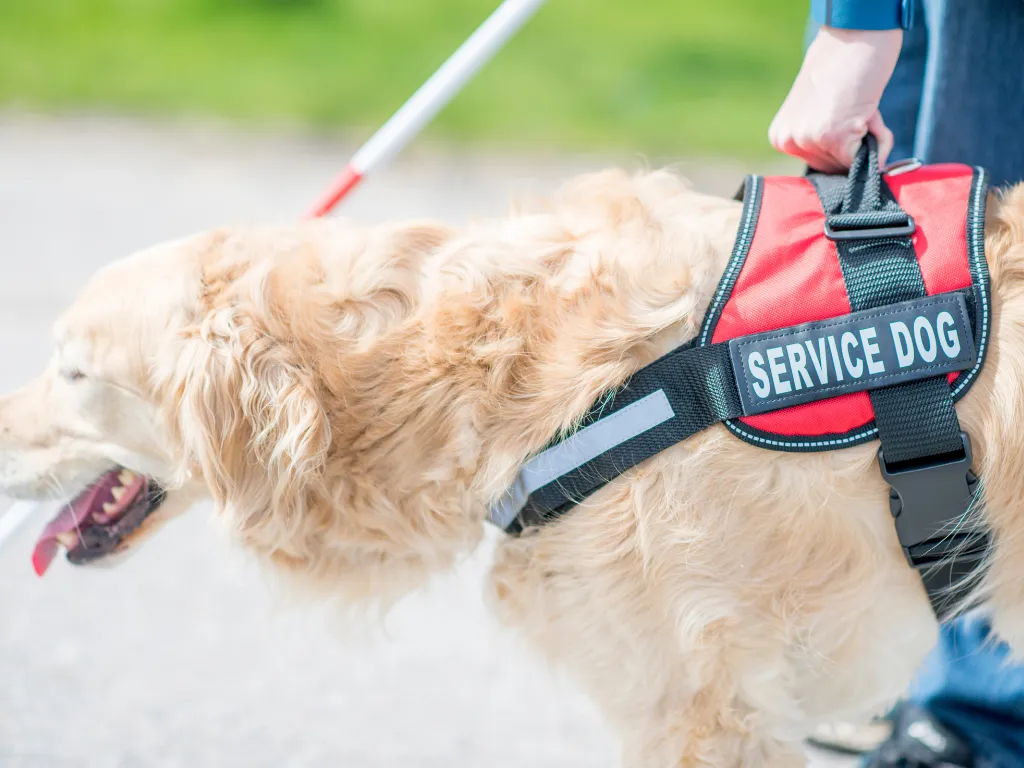
A service dog is specifically trained to perform tasks for a person with a disability. These dogs have legal public access protections because they are considered working animals under federal law.
Service dogs may assist with:
- Medical alerts: Detecting seizures, blood sugar changes, or other medical conditions.
- Mobility support: Retrieving items, opening doors, or assisting with balance.
- Psychiatric tasks: Interrupting panic attacks or helping handlers navigate stressful environments.
- Daily independence: Supporting handlers through highly specialized task training.
This type of training is significantly more advanced than standard obedience or therapy dog preparation. Service dogs must remain highly focused on their handler while working in public spaces with constant distractions.
Because of those expectations, not every dog is suited for service work. Many owners eventually realize their dog may actually be a better fit for therapy dog work or Canine Good Citizen training instead.
Thinking you need more info on Service Dog Training? Visit our Kansas City Service Dog training page!
Where Emotional Support Animals Fit In
Emotional support animals, often called ESAs, create another layer of confusion for dog owners. An emotional support animal provides comfort through companionship, but they are not required to complete specialized public access training.

This means emotional support animals generally do not receive the same public access rights as service dogs. However, they can still provide meaningful emotional benefits for their owners.
Unfortunately, social media and online misinformation have blurred these categories together. Many people assume therapy dogs and emotional support animals automatically receive service dog access rights, which is not accurate.
That confusion is one reason owners benefit from working with qualified, science based trainers who can help explain realistic training paths and expectations.
Can Any Dog Become a Therapy Dog?
One of the most common questions we hear is:
“Can my dog become a therapy dog?”

The honest answer is that not every dog enjoys therapy style work, and that is perfectly okay. Some dogs prefer quieter home environments and become overwhelmed in busy public settings. Others may love people but struggle with noise, handling, or unpredictable movement.
Temperament matters far more than breed.
We have seen excellent therapy dog potential in:
- Golden Retrievers: Often naturally social and people focused.
- Labradors: Friendly, trainable, and adaptable in public spaces.
- Mixed breeds: Many rescue dogs thrive in therapy settings.
- Smaller companion breeds: Great for calmer environments and one on one interactions.
The biggest factor is whether the dog genuinely enjoys social interaction while remaining emotionally stable and responsive in public.
Why CGC Training Is Often the Best Starting Point
For many families, Canine Good Citizen training is the ideal first step before pursuing therapy dog work. CGC focuses on real life public manners and emotional stability instead of flashy obedience behaviors.
Dogs learn how to:
- Walk politely on leash: Without excessive pulling or reactivity.
- Remain calm around distractions: Even in stimulating environments.
- Greet people appropriately: Without jumping or overexcitement.
- Stay composed in public: Around noise, movement, and unfamiliar situations.
Even families who never pursue official therapy work often discover they simply enjoy living with a calmer, more reliable dog.
That is why CGC and therapy dog related training tends to attract owners who want more than basic obedience. They want a dog they can confidently bring into public spaces, family outings, patios, community events, and everyday life.
Check out our blog on Canine Good Citizen training with Newman's!
Why Therapy Dog Training Is Growing So Quickly
Interest in therapy dogs has grown rapidly in recent years. Schools, healthcare programs, universities, and workplaces are increasingly recognizing the emotional benefits calm dogs can provide in stressful environments.
At the same time, dog owners are shifting away from the idea that training is only about “fixing bad behavior.” More families want dogs that feel calm, connected, confident, and enjoyable to live life with in public spaces.
That trend fits extremely well with positive reinforcement dog training and relationship based training methods. Therapy dog preparation is not about forcing dogs into uncomfortable situations. It is about building confidence, emotional regulation, trust, and reliable public behavior over time.
For many owners, the goal becomes larger than obedience alone. They want a dog they feel proud and comfortable bringing into the world.
Why This Topic Fits Modern Dog Owners So Well

Therapy dog and CGC related content also resonates emotionally in ways that traditional obedience content sometimes does not.
Topics like:
- Calm family dogs: Feel relatable and aspirational.
- Public manners: Connect to everyday life.
- Confidence building: Appeals to owners with shy or anxious dogs.
- Community involvement: Creates emotional meaning beyond basic obedience.
That emotional connection is likely one reason therapy dog content is performing so strongly online right now.
Your Takeaway Treat
Therapy dogs, service dogs, and emotional support animals all play important roles, but they are not interchangeable. Understanding those differences helps owners choose realistic goals and training paths for their individual dog.
Some dogs may truly thrive as therapy dog candidates. Others may simply become calmer, more confident family companions through CGC training and public manners work. Both outcomes are incredibly valuable.
If you are curious whether your dog may be a good fit for therapy dog training in Kansas City or Northwest Arkansas, Newman's Dog Training can help evaluate your dog’s temperament and build strong real world skills through science based, positive reinforcement training.
Ready to get started? Reach out for a free phone consultation and let’s talk about your dog’s goals. Book your free consultation today
We proudly offer dog training services in both Kansas City and Northwest Arkansas, including Bentonville, Fayetteville, and surrounding areas.
Step up your dog training game with access to our entire course library and special
rates for one-on-one sessions. Unlock your potential now!
Save More, Learn More, Achieve More!
Please contact us if you have any questions on these tips, [email protected]
Also, follow us on Instagram and Facebook.