
Therapy Dog Training Northwest Arkansas: What Disqualifies a Dog From Therapy Work?
Aug 04, 2026
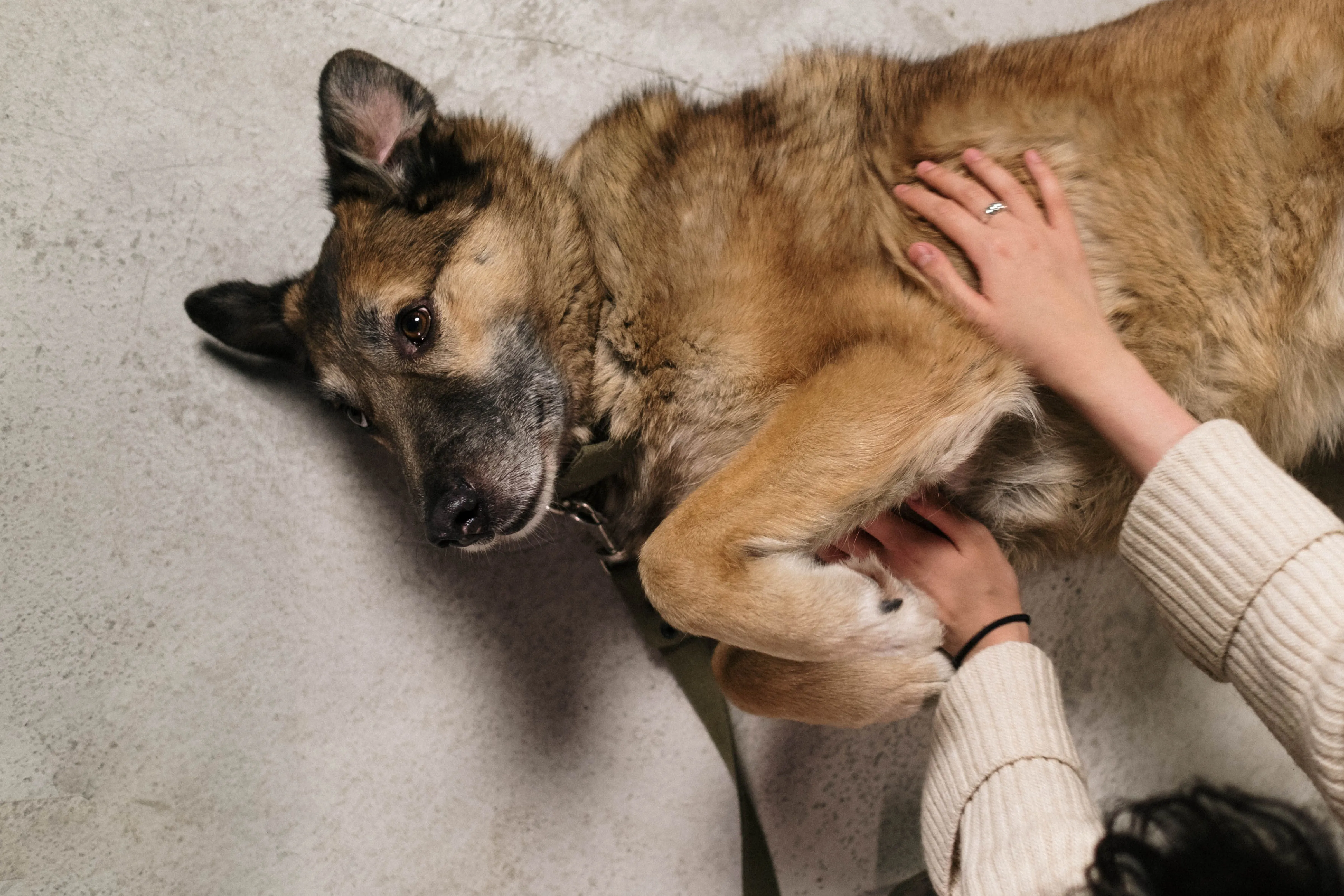
What Does a Therapy Dog Actually Do?
One of the most common questions we hear from families interested in therapy dog training in Northwest Arkansas is, "Can my dog become a therapy dog, or are they already disqualified?"
It is an understandable concern. Many people picture therapy dogs as naturally calm, perfectly behaved dogs that have always loved every person they meet. They assume their own dog has to check every box before they should even think about therapy work.
The reality is much more encouraging. Very few dogs are automatically disqualified from becoming therapy dogs. Most successful therapy dogs are ordinary family pets that have the right temperament, receive thoughtful training, and gradually gain confidence through experience.
At Newman's Dog Training, one of our favorite parts of therapy dog training is watching owners realize their dog is capable of much more than they expected. Many dogs that eventually visit hospitals, schools, libraries, or nursing homes did not start out with perfect manners. They simply had personalities that made them enjoy interacting with people, and their owners were willing to put in the work.
That is why we encourage people not to ask, "Is my dog perfect enough?" Instead, ask, "Does my dog genuinely enjoy making people smile?" That question usually tells us far more about a dog's long-term potential.
Therapy Dogs Are Different Than Service Dogs
One of the biggest misconceptions we hear is confusing therapy dogs with service dogs.
A service dog is individually trained to perform specific tasks that help one person with a disability. Those tasks might include retrieving medication, alerting to medical conditions, providing mobility assistance, or interrupting panic attacks. Service dogs receive legal access protections because of the work they perform for their handler.
A therapy dog has a completely different job. Therapy dogs provide comfort and emotional support to many different people instead of one specific individual. They often volunteer in hospitals, rehabilitation centers, schools, libraries, universities, hospice facilities, counseling programs, and community events.
Rather than performing specialized tasks, therapy dogs succeed by remaining calm, friendly, and emotionally stable while interacting with strangers in unfamiliar environments.
Because of that, the qualities we evaluate are often different than what many owners expect.
What Actually Disqualifies a Dog From Therapy Work?
This is where many owners are pleasantly surprised.
Breed does not automatically disqualify a dog.
Age does not automatically disqualify a dog.
Being adopted from a shelter does not disqualify a dog.
Not knowing advanced obedience does not disqualify a dog.
Instead, we evaluate whether the dog enjoys interacting with people and whether those interactions can remain safe and positive for everyone involved.
That means we pay much closer attention to temperament than flashy obedience skills.
A dog that performs beautiful obedience routines but becomes uncomfortable around strangers may not be a good therapy dog.
Meanwhile, a dog that still needs work on loose leash walking but absolutely lights up when meeting new people may have tremendous long-term potential.
Temperament is much harder to change.
That is why our evaluations focus on the whole dog rather than simply checking whether they can sit, stay, or lie down on command.
Aggression Is the Biggest Concern
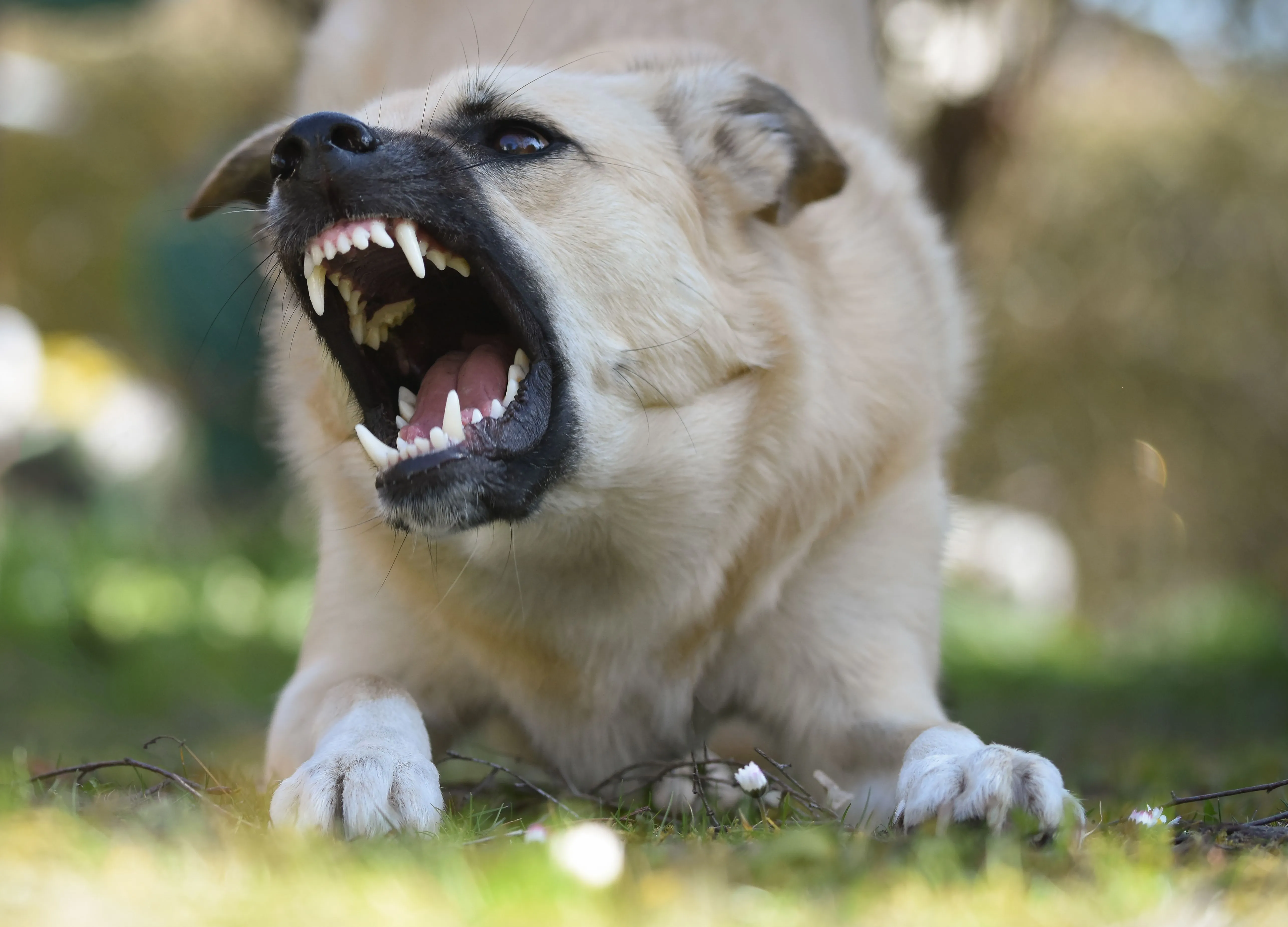
If there is one factor that raises the biggest concern during a therapy dog evaluation, it is aggression toward people.
Therapy dogs regularly interact with children, older adults, medical staff, volunteers, and complete strangers. Some people move unpredictably. Others may reach toward the dog awkwardly because of mobility limitations or medical conditions. Therapy dogs need to remain comfortable during those interactions.
Safety always comes first.
Any history of biting or aggressive behavior deserves careful evaluation before therapy work is considered.
However, there is an important distinction that many owners overlook.
Sometimes what people describe as aggression is actually fear.
A fearful dog may bark, growl, back away, or lunge because they feel overwhelmed, not because they want to harm someone. That does not necessarily make them a good therapy dog today, but it does mean the conversation becomes much more nuanced.
One of our jobs as trainers is determining why the behavior is happening instead of simply labeling it.
Understanding the motivation behind a behavior helps us determine whether therapy work is realistic, whether confidence-building exercises may help, or whether another activity would ultimately make the dog happier.
Fear Can Be Just as Important as Aggression
When most people think about dogs that are not suited for therapy work, they picture aggression. While aggression is certainly a concern, fear can be just as limiting.
Think about the environments where therapy dogs spend their time. Hospitals have rolling beds, IV poles, wheelchairs, automatic doors, elevators, unfamiliar smells, and people who may move or speak differently than your dog is used to. Schools can be loud and unpredictable. Nursing homes often have walkers, oxygen equipment, and residents who may reach out suddenly.
For some dogs, these things are simply part of another fun adventure. For others, they create significant stress.
A therapy dog should not simply tolerate these situations. They should feel comfortable in them.
That doesn't mean your dog can never be startled. Every dog notices something unexpected from time to time. The difference is how quickly they recover. Dogs that briefly investigate a strange noise before relaxing again demonstrate confidence. Dogs that remain anxious, avoid people, or struggle to recover may not enjoy therapy work, even if they never show aggression.
One of the biggest mistakes owners make is assuming they can simply "push through" fear by exposing their dog to more situations. Unfortunately, forcing a nervous dog into stressful environments often has the opposite effect. Instead, confidence is built gradually through positive experiences that teach the dog the world is safe.
Our goal is never to convince a dog to tolerate therapy work. Our goal is to determine whether therapy work is something they genuinely enjoy.
Sometimes Being Too Friendly Creates Problems
This surprises many owners.
Some dogs absolutely adore people. They want to greet everyone they see, jump into laps, shower strangers with kisses, and wag their tails so hard their entire body moves.
That sounds like the perfect therapy dog, right?
Not necessarily.
Overexcitement can be just as challenging as shyness.
A therapy dog visiting a hospital cannot jump onto a patient's bed. They cannot pull toward every person in the hallway or become so excited that they stop listening to their handler. They need to remain calm while still being friendly.
The good news is that excitement is often much easier to improve than fear or aggression. Through consistent positive reinforcement training, dogs can learn polite greetings, calm leash manners, and how to settle even in exciting environments.
This is one reason we encourage owners not to rule their dog out too early. Many dogs simply need better manners, not a different personality.
Does Breed Really Matter?
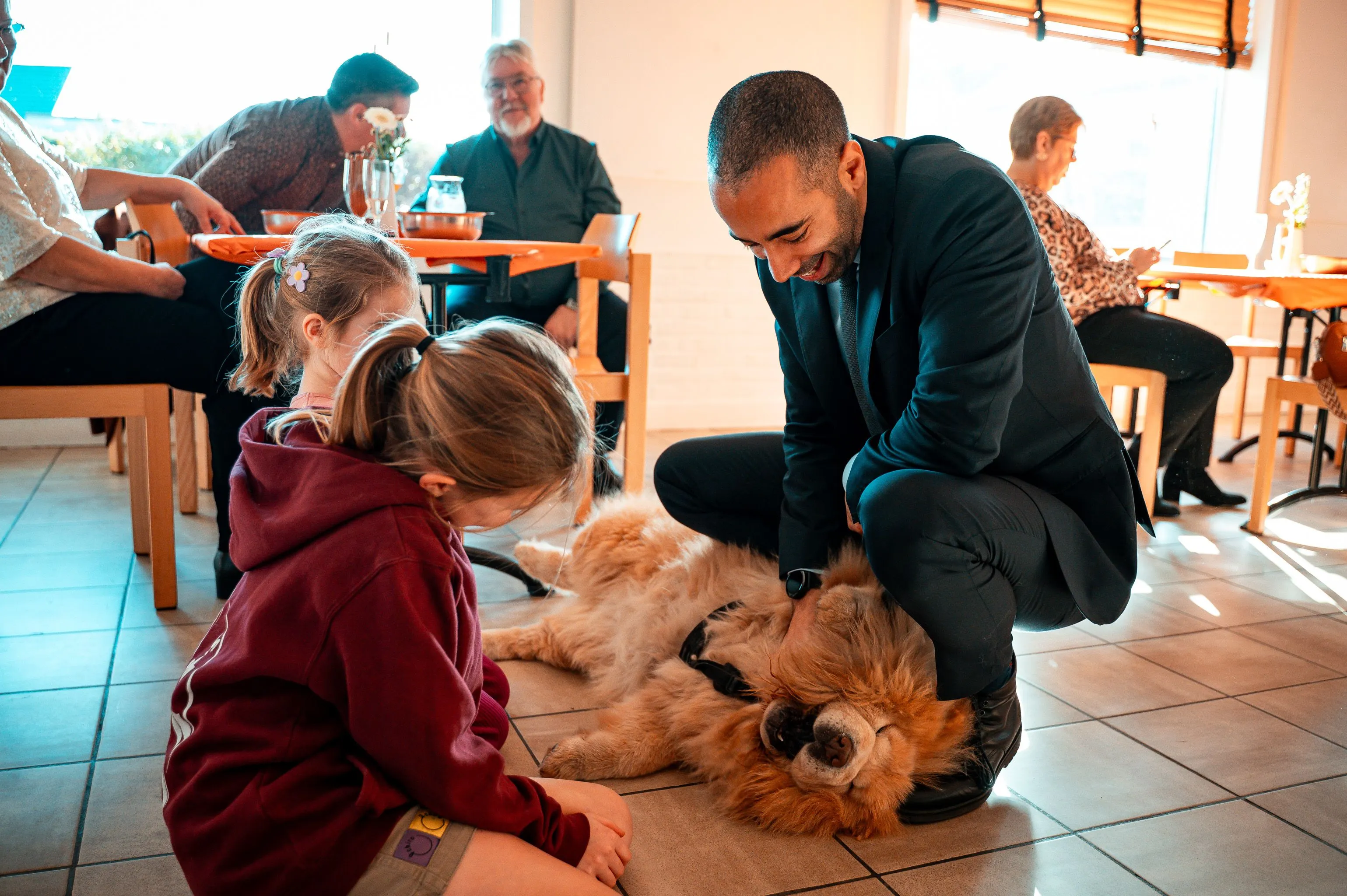
Another myth we hear regularly is that only certain breeds can become therapy dogs.
That simply is not true.
Golden Retrievers and Labrador Retrievers often receive attention because they are naturally social, highly trainable, and generally enjoy interacting with people. Those qualities certainly make them popular therapy dogs.
However, we have also seen wonderful therapy dogs that were mixed breeds, rescue dogs, Standard Poodles, Cavalier King Charles Spaniels, Collies, and many others.
Likewise, we have met plenty of Golden Retrievers that were wonderful family pets but simply did not enjoy therapy work.
Breed may influence tendencies, but it does not determine success.
Every dog deserves to be evaluated as an individual.
Can Older Dogs Become Therapy Dogs?
Absolutely.
Many owners believe they missed their opportunity because their dog is already four, six, or even eight years old.
Fortunately, therapy work is not a sport that depends on youthful energy. In fact, many older dogs make exceptional therapy dogs.
They are often calmer, more patient, less impulsive, and more comfortable simply relaxing beside people. Those qualities can make visits especially enjoyable for patients and residents.
As long as your dog is healthy enough to participate comfortably and enjoys meeting people, age alone rarely prevents them from becoming a therapy dog.
We would much rather work with a calm seven-year-old who loves people than an energetic one-year-old who becomes overwhelmed every time they enter a new building.
Can Reactive Dogs Ever Become Therapy Dogs?
This is one of the hardest questions to answer because reactivity is not one single behavior.
Some dogs become reactive because they are fearful. Others become reactive because they are frustrated and desperately want to greet every dog they see. Still others become reactive because they have practiced the behavior for years.
That is why blanket answers rarely help.
Some reactive dogs make tremendous progress through training and confidence building. Others improve enough to enjoy everyday life but still find busy therapy environments stressful.
Our responsibility is not to convince every dog to become a therapy dog. Our responsibility is to help each dog become the happiest, most confident version of themselves.
Sometimes that path leads to therapy work.
Sometimes it leads somewhere completely different.
Either outcome is perfectly okay, because success should always be measured by your dog's quality of life, not by a specific title.
What Do Therapy Dog Organizations Actually Look For?
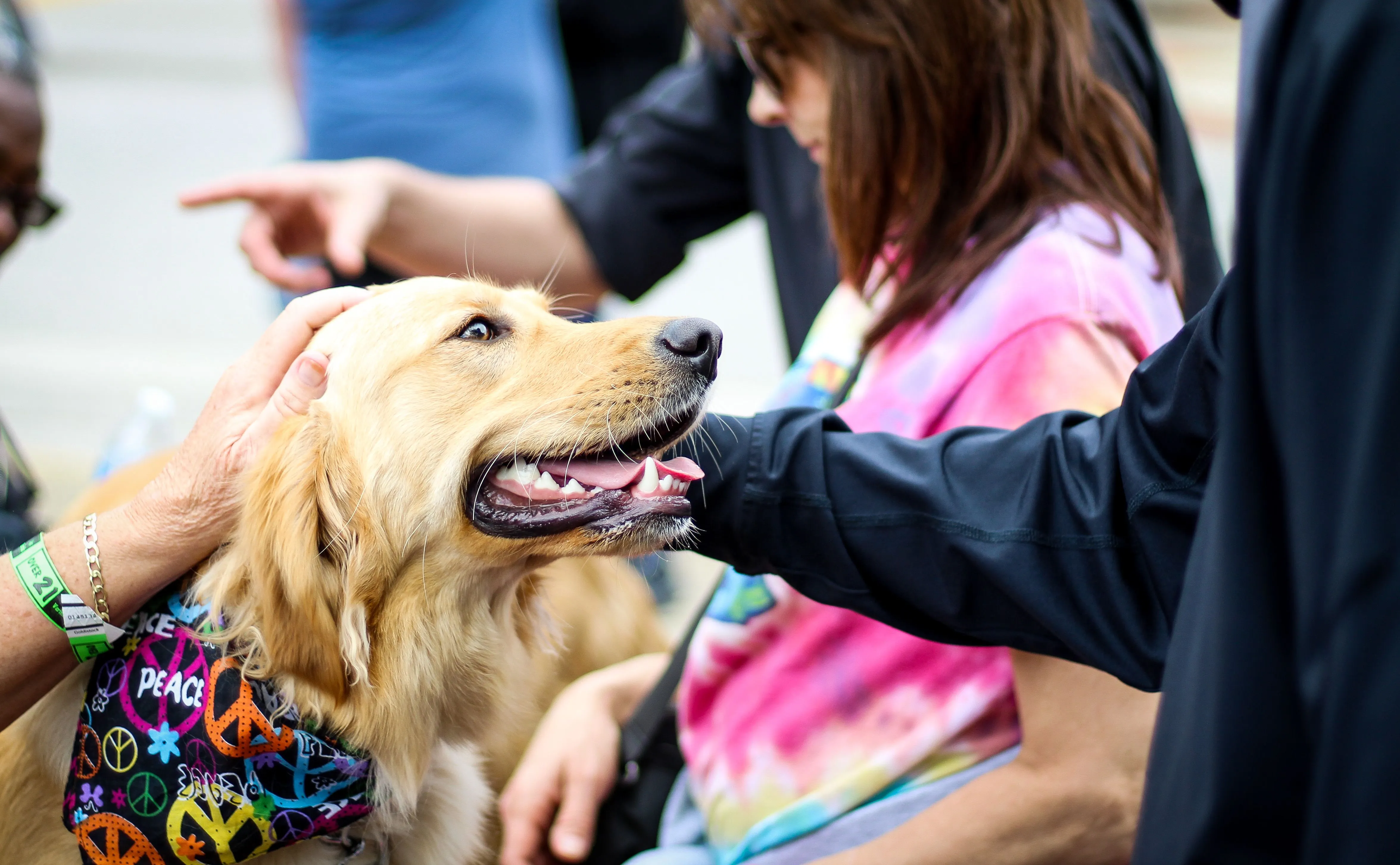
Once owners realize their dog might be a good fit for therapy work, the next question is usually, "Do they have to pass some kind of test?"
The answer is yes, although the exact requirements depend on the therapy organization you choose to volunteer with. While every organization has its own standards, they are all looking for the same general qualities.
They want dogs that are calm, predictable, and comfortable interacting with people. They are not looking for flashy tricks or competition-level obedience. Instead, they want to know that your dog can walk politely on a leash, remain under control around distractions, greet people appropriately, and recover quickly from unexpected situations.
Many organizations also require a veterinary health record, minimum age requirements, and a temperament evaluation before a team can begin volunteering. Some ask that dogs earn the AKC Canine Good Citizen (CGC) title first, while others use their own evaluation process.
The important takeaway is that these evaluations are designed to ensure therapy visits are enjoyable for everyone involved, including your dog.
How We Evaluate Therapy Dog Prospects at Newman's Dog Training
Every future therapy dog starts with the same question: Does this dog genuinely enjoy interacting with people? Before we ever think about Canine Good Citizen testing or visiting hospitals, schools, or nursing homes, we want to make sure therapy work is something your dog will truly enjoy.
newmansdogtraining.com/therapy-dog-training-nwa
Our first step is a temperament evaluation. During this evaluation, we get to know your dog, your goals, and how your dog responds to the types of situations they'll encounter as a therapy dog. We aren't looking for perfection. We're looking for a dog that is confident, social, and comfortable in new environments.
Some of the qualities we evaluate include:
- Confidence around unfamiliar people without showing fear or avoidance.
- Comfort with gentle handling and petting from people they don't know.
- Calm behavior in busy environments that may include children, wheelchairs, walkers, medical equipment, and unexpected noises.
- The ability to recover quickly if something unexpected happens.
- Low reactivity around other dogs, distractions, and everyday activity.
If your current dog is a good candidate, we'll create a training plan focused on the skills needed for successful therapy visits. That includes polite greetings, loose leash walking, settling comfortably beside people, remaining focused around distractions, and preparing for the AKC Canine Good Citizen (CGC) test. The CGC is an excellent foundation and is required or strongly recommended by many therapy dog organizations.
If your dog isn't quite ready yet, that doesn't always mean therapy work is off the table. Some dogs simply need more confidence, additional socialization, or stronger foundation skills before they're ready to move forward. If we believe your current dog truly wouldn't enjoy therapy work, we'll tell you honestly. Our goal isn't to make every dog a therapy dog. Our goal is to help every dog succeed in the role that best fits their personality and temperament.
Just as importantly, we're training both ends of the leash. Therapy work is a partnership, and handlers play just as important a role as their dogs. We'll teach you how to recognize your dog's body language, understand when they're feeling confident or stressed, and know when it's time to take a break. The strongest therapy teams are built on trust, communication, and a dog that genuinely enjoys bringing comfort to others.
Common Myths About Therapy Dogs
Myth #1: Therapy dogs have to be perfectly obedient.

Reality: Therapy dogs should have good manners and reliable obedience, but perfection is not the goal. A calm, friendly dog that enjoys people is often a stronger candidate than a dog with flawless obedience that dislikes social interaction.
Myth #2: Only certain breeds can become therapy dogs.
Reality: Temperament matters far more than breed. Wonderful therapy dogs come in many breeds, sizes, and backgrounds.
Myth #3: Rescue dogs cannot become therapy dogs.
Reality: Many rescue dogs become exceptional therapy dogs. Their past does not automatically determine their future.
Myth #4: If my dog is not ready today, they never will be.
Reality: Confidence, manners, and emotional stability often improve dramatically through positive reinforcement training and gradual exposure to new experiences.
Is Therapy Work the Right Goal for Every Dog?
Sometimes owners feel disappointed when they discover therapy work may not be the best fit for their dog.
We understand that feeling. Wanting to share your dog with others is a wonderful goal.
However, the best therapy dogs genuinely enjoy the work. They look forward to meeting new people, adapt well to changing environments, and recover quickly when something unexpected happens.
If your dog finds those situations stressful, there is nothing wrong with choosing a different path.
Some dogs thrive on hiking trails. Others love nose work, agility, trick training, or simply spending time with their family. Those activities are every bit as meaningful if they match your dog's personality.
Our goal has never been to turn every dog into a therapy dog.
Our goal is to help every dog become the happiest, most confident version of themselves.
Your Takeaway Treat
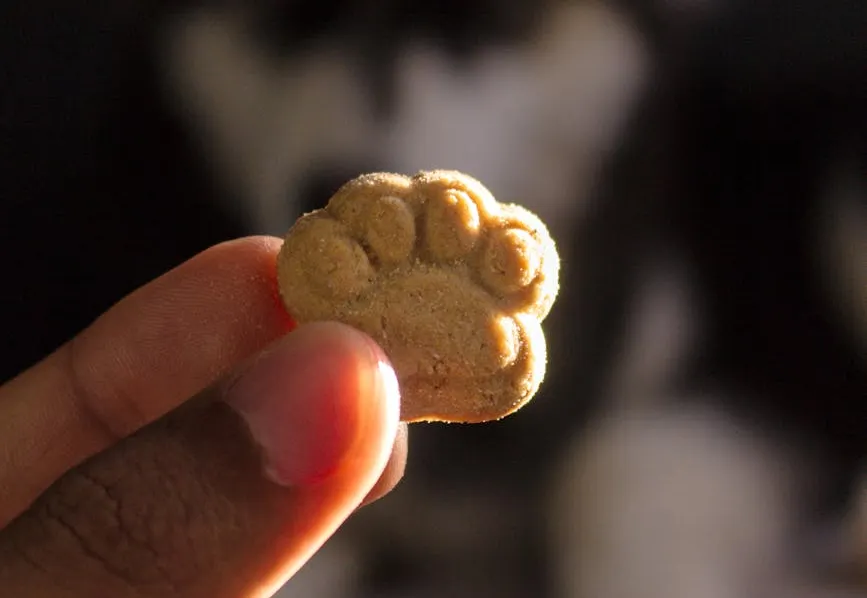
If there is one thing we hope you remember, it is this:
Very few dogs are automatically disqualified from therapy work.
The qualities that matter most are emotional stability, confidence, friendliness, and a genuine enjoyment of interacting with people. Obedience can be taught. Confidence can often be built. Experience comes with time.
What matters most is making sure therapy work is something your dog truly enjoys, not something they simply tolerate.
If your dog is not ready today, that does not mean they never will be. And if therapy work ultimately is not the right fit, that does not mean your dog has failed. Every dog has unique strengths, and helping them thrive is always the real goal.
Ready to Explore Therapy Dog Training in Northwest Arkansas?
If you are wondering whether your dog has the temperament to become a therapy dog, we'd love to help.
At Newman's Dog Training, we use positive reinforcement methods to help dogs build confidence, improve manners, and prepare for real-world success. Whether your goal is volunteering in hospitals, schools, libraries, or community programs, we can help you determine if therapy work is the right fit for your team.
Schedule your free phone consultation today, and let's talk about your goals, answer your questions, and create a training plan that helps both you and your dog succeed.
We proudly offer dog training services in both Kansas City and Northwest Arkansas, including Bentonville, Fayetteville, and surrounding areas.
Step up your dog training game with access to our entire course library and special
rates for one-on-one sessions. Unlock your potential now!
Save More, Learn More, Achieve More!
Please contact us if you have any questions on these tips, [email protected]
Also, follow us on Instagram and Facebook.