
Is It Ever Too Late to Train a Dog? A Professional Dog Trainer Explains
Sep 14, 2026
One of the questions we hear surprisingly often is, "Is my dog too old to train?"
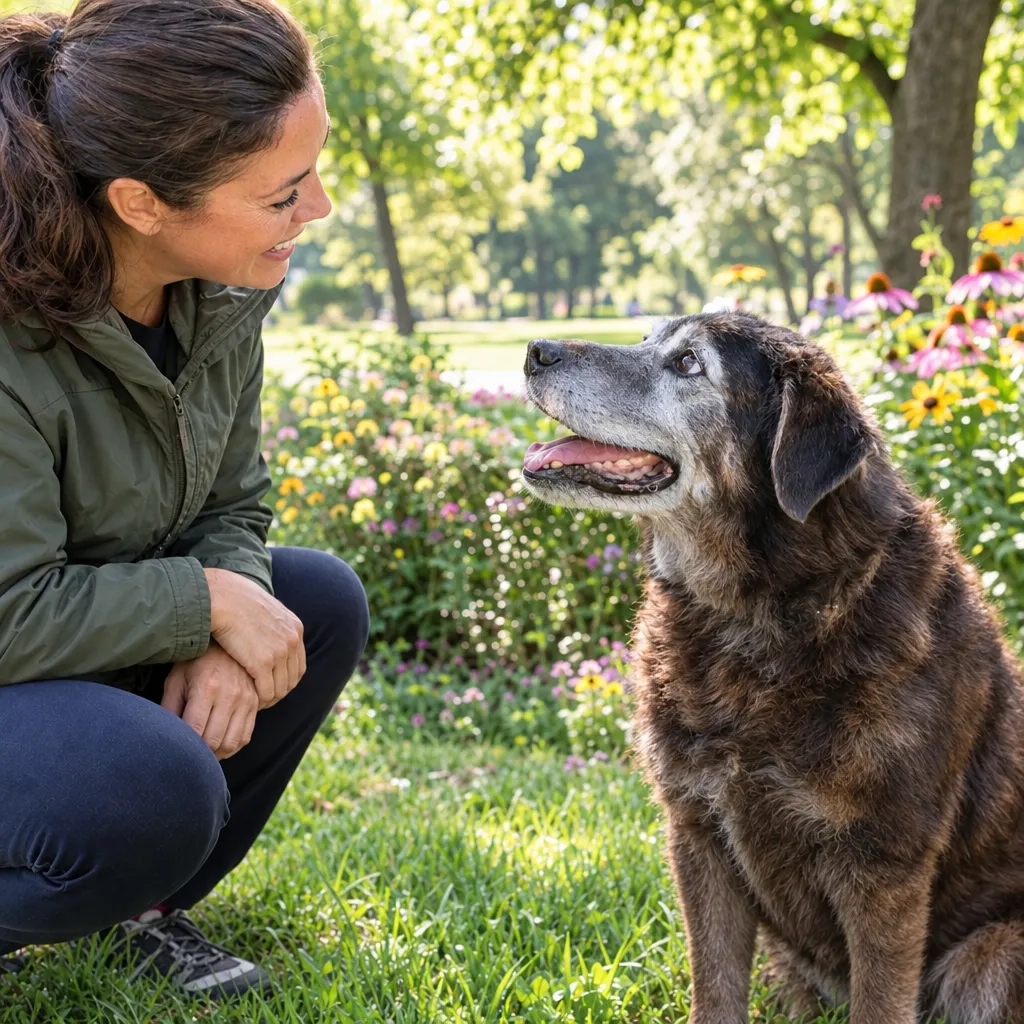
Sometimes the dog is three or four years old. Sometimes they're eight or ten. Other times, the owner isn't really worried about age at all. They're worried because a behavior has been happening for years and they're wondering whether they've waited too long to do something about it.
The short answer is no, it is almost never too late to train a dog.
Dogs can learn throughout their lives. We work with adult and older dogs all the time, and many make tremendous progress. But there is an important part of that answer that tends to get left out when people talk about training older dogs:
Teaching an older dog something new and changing a behavior they've practiced for years are not necessarily the same thing.
Your seven-year-old dog may learn a new cue surprisingly quickly. Changing seven years of pulling toward every dog they see on a walk may take more time and practice. And if the behavior is connected to fear, anxiety, or another emotional response, we're working on more than obedience.
Understanding that difference can make dog training much less frustrating for both you and your dog.
Dogs Don't Suddenly Stop Learning at a Certain Age
There's an old saying that you can't teach an old dog new tricks. Fortunately, dogs never got that memo.
Dogs continue learning throughout their lives. An adult dog can learn sit, stay, recall, loose leash walking, place, polite greetings, new household routines, and plenty of other skills.
In some ways, an adult dog can actually be easier to train than a puppy.
Puppies are learning everything at once. They're figuring out potty training, chewing, sleeping routines, socialization, impulse control, leash walking, and how to live in a human household. Their attention spans can also be incredibly short.
An adult dog may already understand the basics of living with people. They may be able to focus longer and settle more easily. That gives us a much different starting point.
We see this frequently with rescue dogs and dogs adopted as adults. Owners sometimes worry that because they didn't raise the dog from puppyhood, they've missed their opportunity to shape their behavior.
You haven't.
You may not know everything the dog experienced before coming into your home, but you can absolutely start teaching them what life looks like with you.
Age Usually Isn't the Hard Part. History Is.
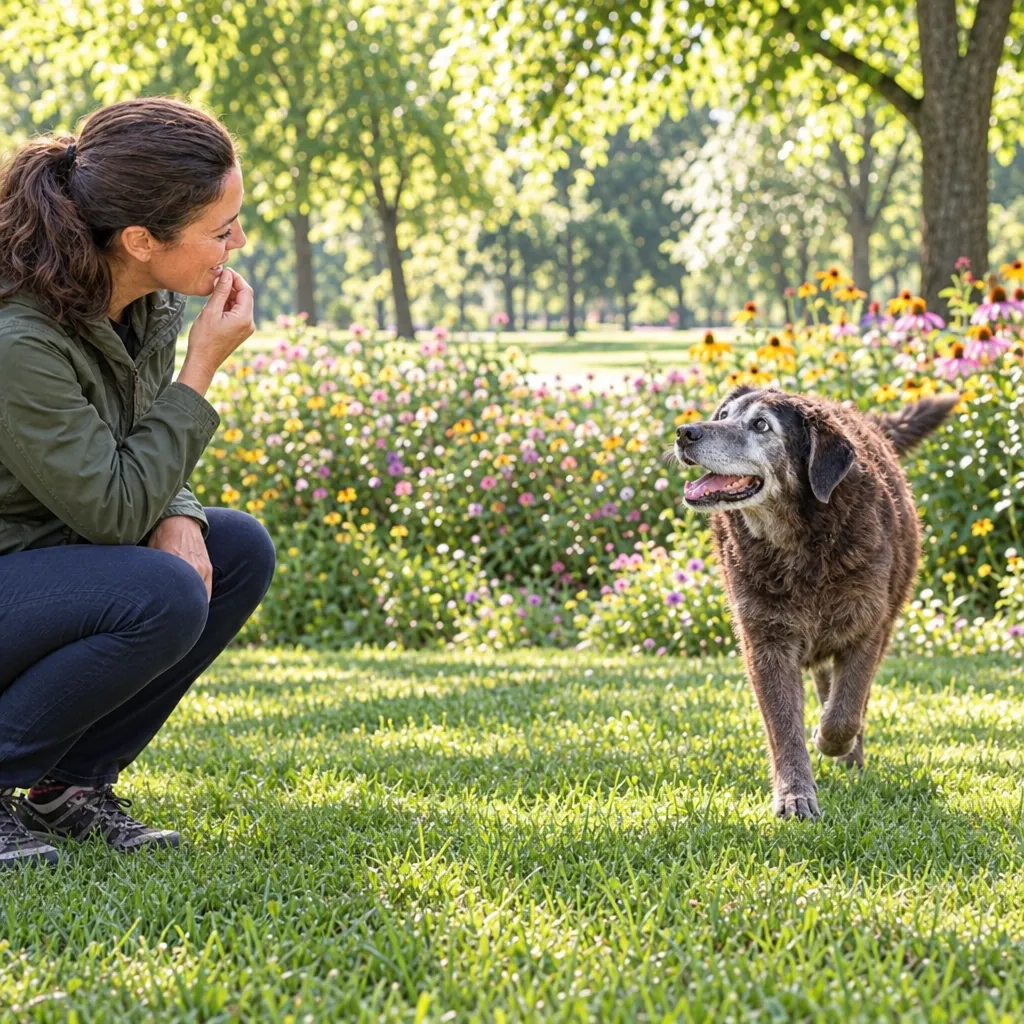
When someone tells us their dog is "too old to train," the dog's age often isn't what they're actually concerned about. They're concerned about how long the behavior has been happening.
Imagine a six-year-old dog that has pulled on the leash every day since they were a puppy. If pulling has gotten that dog where they wanted to go thousands of times, pulling has become a very well-practiced strategy.
Now we introduce a new idea: walking on a loose leash gets you where you want to go. The dog can absolutely learn it. But we're competing with years of reinforcement for the old behavior. That's very different from teaching the same skill to a puppy who has only been walking on a leash for a few weeks.
Behaviors that have been practiced for years don't become permanent, but they do become habits.
The same principle shows up in a lot of everyday behaviors:
- Jumping on guests because jumping has reliably earned attention
- Barking out the window because the person or dog eventually disappears
- Pulling on leash because pulling has gotten the dog where they wanted to go
- Counter surfing because occasionally there really is something worth finding
- Ignoring recall because whatever the dog is doing is more rewarding than coming back
The longer something has worked for your dog, the more repetition it may take to build a new habit. That doesn't mean training isn't working. It means we're asking your dog to replace a strategy they already know with a better one.
We've even seen this happen with our own dog, Barry. For the first few years of his life, Barry would never take food off the counter, coffee table, or anywhere else in the house. It simply wasn't something he had learned to do.
Then we started taking him on long campervan trips, including months-long trips around the U.S. and Mexico. Barry became our official dish cleaner. After meals, we'd let him lick our plates before we washed them.
It worked great for us, but Barry learned something along the way: human food left within reach might be available to him.
Since then, he's occasionally helped himself to a kid's plate left on the floor or something tempting on a table. He's still pretty good about it, but the way he thinks about food left around the house has changed. We accidentally taught him that sometimes human food is fair game.
Our bad, but it worked perfectly well for what we wanted him to do at the time. It's a simple example of how dogs continue learning throughout their lives, whether we're intentionally training them or not.
Teaching a Skill Is Different From Changing an Emotional Response
This is probably the most important distinction to understand when talking about how long it takes to train an older dog. Suppose your dog doesn't know how to lie down on cue.
We can teach that behavior using positive reinforcement. Your dog learns what we're asking, discovers that doing it produces something they enjoy, and the behavior becomes stronger with repetition.
Now imagine your dog barks and lunges whenever another dog appears on a walk.
That may look like an obedience problem, but reactivity is often connected to an emotional response. Your dog might be afraid, frustrated, overly excited, or uncomfortable with another dog being nearby.
Simply teaching "sit" doesn't necessarily change how your dog feels about the dog across the street. The same thing can happen with fear of strangers, sensitivity to handling, separation-related behaviors, resource guarding, or anxiety in unfamiliar environments.
In those situations, we're not simply asking, "Does the dog know what to do?"
We're also asking, "How does the dog feel in this situation?" That can change the training timeline considerably.
A dog can learn a cue in a few sessions. Helping a dog feel safer around something they've feared for several years may require gradual exposure, careful management, positive associations, and a lot more patience.
That isn't a failure of training. It's simply a different kind of training problem.
It is also why comparing your dog's progress to another dog's progress isn't particularly useful. Two dogs can display similar behaviors for completely different reasons, and the training plan needs to address the dog in front of us rather than just the behavior we can see.
Can You Change Years of "Bad" Behavior?
Usually, we don't find the word "bad" very helpful when talking about dogs.
Your dog isn't pulling, barking, jumping, or stealing food because they're trying to make your life difficult. They're doing something that has worked for them in the past.
Jumping gets attention.
Barking may make something move away.
Pulling gets them closer to the interesting smell.
Counter surfing occasionally produces the greatest reward imaginable: unattended food.
From the dog's perspective, these behaviors can make perfect sense. Our job is to figure out what the dog is getting from the behavior and teach them another way to achieve what they need.
For example, instead of simply correcting a dog every time they jump on a visitor, we can teach them that keeping four paws on the floor is what makes attention happen.
Instead of fighting the leash for an entire walk, we can teach the dog that staying near us keeps the walk moving. Instead of repeatedly yelling at a dog for barking at the window, we can change access to the trigger while teaching an alternative behavior.
Good training isn't just stopping behavior. It's teaching the dog what to do instead.
That approach becomes especially important when we're working with a behavior the dog has practiced for years.
There may still be times when management is part of the solution. If your dog has spent five years stealing food from the counter, leaving a plate of chicken sitting at nose level while you're in another room isn't a great training setup. Preventing rehearsal of the old behavior gives the new behavior a better chance to become the habit.
What About a Dog Who Has Never Had Formal Training?
This is another situation where owners sometimes feel like they're behind.
Maybe you adopted an adult dog who doesn't know basic cues. Maybe life got busy after puppyhood and training never really happened. Or maybe your dog has been relatively easy to live with until a recent change exposed some gaps in their training.
You don't need to feel like you have to "catch up" on everything at once. We usually start with the skills that will make the biggest difference in your everyday life.
For one family, that might be leash walking because every walk has become frustrating. For another, it might be recall because they want more freedom outdoors. Another dog may need to learn how to settle when guests visit.
Training should solve real problems in your life with your dog.
A long list of obedience commands isn't particularly useful if none of them address the reason you contacted a trainer in the first place. This is one reason our training plans at Newman's Dog Training are based on the individual dog and family rather than trying to put every dog through exactly the same program.
We want to know what would actually make life with your dog better. Then we can decide which skills will help you get there.
Older Dogs May Actually Have Some Training Advantages
Puppies get most of the attention when people talk about dog training, but adult dogs can bring some significant advantages to the process.
Many older dogs have better attention spans, more predictable energy levels, and an established relationship with their owners. They may already understand household routines and have enough life experience that every sound, smell, person, and leaf blowing across the sidewalk isn't the most exciting thing they've ever encountered. We can use all of that during training.
An older dog may also have a long reinforcement history with you. They know what kinds of rewards they enjoy, they understand how you communicate, and they may already have several useful behaviors we can build on.
Of course, age can also bring physical considerations. If we're training a senior dog, we want to make sure what we're asking is comfortable. A dog with limited mobility may struggle with repeated sits or downs. Hearing or vision changes may mean we need to adjust how cues are delivered.
Training should always fit the dog in front of us. The goal isn't to make an older dog train like a six-month-old puppy. It's to find the most effective and enjoyable way for that individual dog to learn.
How Long Does It Take to Train an Adult Dog?
This is where we'd love to give everyone a simple answer, but there isn't an honest one. Some changes happen very quickly.
You may notice better communication with your dog after the first training session because you finally understand why a behavior is happening and what to do differently.
Other goals take weeks or months of consistent practice.
Several things influence the training timeline:
- What behavior you're trying to change
- How long your dog has practiced it
- How often the behavior still gets reinforced
- Whether fear, anxiety, or reactivity is involved
- How consistently everyone in the household trains
- How often you practice between sessions
- The environments where you expect the behavior to work
That last one matters more than many owners realize. A dog may learn to walk beautifully beside you in your driveway and still pull when you take them to a busy park. That doesn't mean they forgot their training.
Dogs don't automatically generalize skills the way people often expect them to. Your living room, driveway, neighborhood sidewalk, pet-friendly store, and busy park are completely different learning environments from your dog's perspective.
We have to practice behaviors in different environments and gradually increase distractions so the dog learns that the same skill applies in more than one place.
This is also why asking exactly how many training sessions a dog will need can be difficult to answer before we've met the dog and understand the goal. Training isn't just about whether your dog can perform the behavior once. We want the behavior to become useful in your actual life.
Does Positive Reinforcement Work With Older Dogs?
Absolutely. Positive reinforcement isn't puppy training. It's a way of teaching.
When a behavior produces an outcome the dog values, that behavior becomes more likely to happen again. That learning process doesn't disappear because a dog turns five, eight, or ten.
At Newman's Dog Training, we use reward-based, science-based methods because we want dogs to understand what we're asking and feel confident participating in the training process.
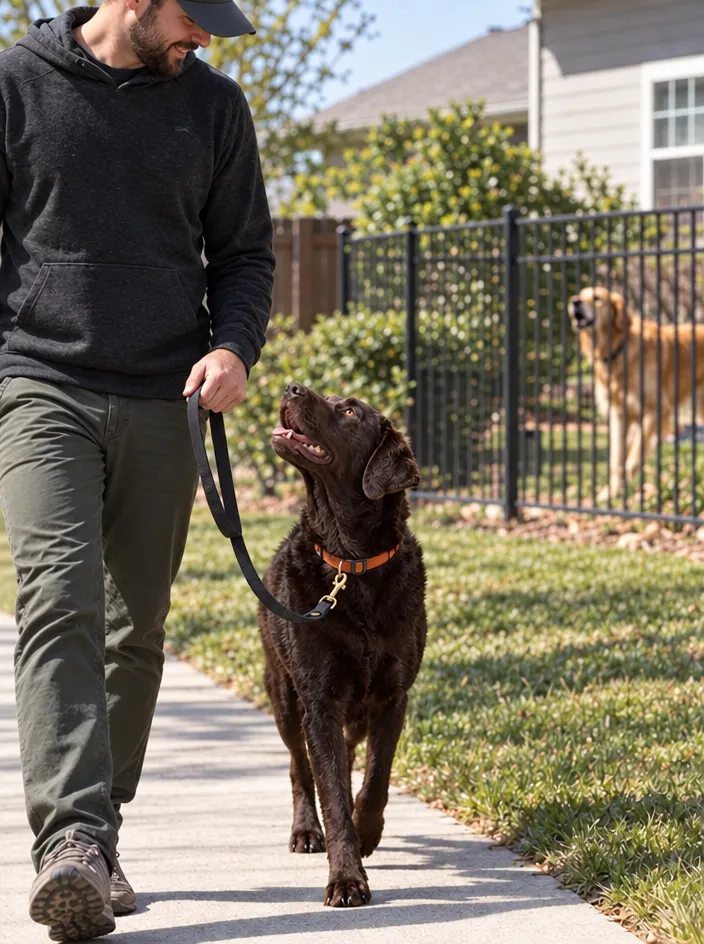
This becomes especially important with dogs that already have fear or anxiety around certain situations. If a dog is afraid, adding more discomfort may suppress what we're seeing without actually changing how the dog feels.
We would rather teach the dog new skills, create positive associations, manage situations where necessary, and build confidence at a pace the dog can handle.
The goal isn't simply a dog that stops doing something. We want a dog that understands what to do instead.
And as Barry's plate-cleaning career demonstrates, reinforcement works whether we're deliberately conducting a training session or simply going about our day. Dogs are constantly learning which behaviors work. Good training helps us become a little more intentional about the lessons they're learning.
You Don't Have to Wait Until a Problem Gets Worse
Although it's rarely too late to train a dog, that doesn't mean waiting is helpful. Behaviors become stronger through repetition.
If your dog has started barking at dogs on walks, it's generally easier to address after a month than after three years. If your adolescent dog has discovered that jumping gets attention, teaching an alternative now is easier than waiting until jumping has become their standard greeting.
The same applies to puppies. We don't recommend early training because puppies somehow lose the ability to learn later. We recommend it because it's easier to build good habits than replace established ones.
But if those habits are already established, don't let that discourage you. Start where your dog is today. That's the only starting point that matters.
There's also no benefit in spending your training time feeling guilty about what you should have done six months or six years ago. Once we understand how a behavior developed, that information is useful because it helps us build the training plan. After that, we're much more interested in what we can teach your dog going forward.
What Training Looks Like at Newman's Dog Training
When we begin working with a dog, we aren't judging how much training you should have done already. We want to know what life looks like right now and what you'd like it to look like instead.
Maybe you want to:
- Enjoy walks with your dog again
- Have calmer greetings when friends or family visit
- Help an adopted adult dog adjust and learn your household routines
- Build a more reliable recall
- Work through barking, pulling, jumping, or other established habits
- Finally get help with reactivity you've been managing for years
Those goals give us somewhere to start.
Our trainers use positive reinforcement and individualized training plans to teach both dogs and their people. Depending on your needs, that may mean working alongside a trainer through private training or having us do more of the hands-on work through Day Training and then transferring those skills back to you.
Either way, owner involvement matters. We can teach your dog new behaviors, but the behaviors become part of everyday life through what happens after the training session ends.
That's why we spend time helping owners understand how to reinforce progress, how to respond when old habits show up, and how to continue training without feeling like every interaction with their dog has become a training session.
Whether you're working with our trainers in Kansas City or Northwest Arkansas, the goal is the same: practical training that makes everyday life with your dog better.
🐾 Your Takeaway Treat
It is almost never too late to train your dog.
Your dog's age matters much less than where they're starting, what they've learned in the past, and what you're trying to change. An older dog can learn new skills, build new habits, and make meaningful progress even after years of doing things differently.
Some behaviors will change quickly. Others, especially behaviors connected to fear, anxiety, reactivity, or years of repetition, deserve more time and patience. Progress doesn't have to happen overnight to be meaningful.
A calmer walk, one successful greeting, a dog choosing to check in with you instead of reacting, or finally understanding how to communicate what you want are all signs that learning is happening.
Every repetition gives your dog another opportunity to practice the behavior you'd rather see. So if you've been putting off training because you think you waited too long, don't let your dog's age be the reason you keep waiting.
The best time to start may have been earlier. The next best time is now.
Ready to Start Training?
If you're wondering whether training can still help your adult or older dog, we'd be happy to talk through what's going on.
Newman's Dog Training offers positive reinforcement dog training in Kansas City and Northwest Arkansas, with training plans built around your dog, your goals, and the challenges you're actually experiencing at home and out in the real world.
Whether you're starting with basic manners or trying to change a behavior that's been happening for years, we'll help you figure out a realistic next step.
Schedule a free phone consultation with Newman's Dog Training to get started.